

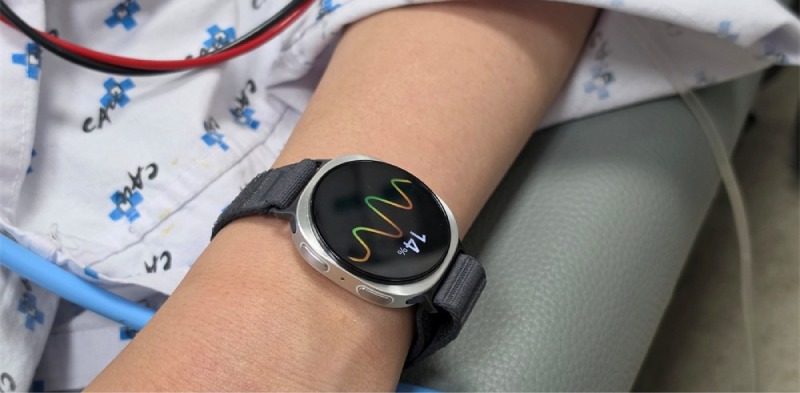
Samsung has announced a major medical technology breakthrough after a joint clinical study with Chung-Ang University Gwangmyeong Hospital successfully demonstrated the ability to predict vasovagal syncope (VVS) using biosignals collected through the Galaxy Watch6.
Vasovagal syncope is a condition in which a person suddenly faints due to a rapid drop in heart rate and blood pressure, often triggered by stress or emotional reactions. Although fainting itself is usually not life-threatening, it can result in serious secondary injuries such as fractures or head trauma caused by sudden falls. Researchers believe that early prediction could play a key role in preventing these injuries.
Professor Junhwan Cho from the Department of Cardiology at Chung-Ang University Gwangmyeong Hospital stated that up to 40 percent of people experience vasovagal syncope during their lifetime, while nearly one-third suffer recurring episodes. According to him, advance warning could help patients move to a safer position or seek assistance before losing consciousness.
The joint research team, led by Professor Cho, evaluated 132 patients who showed suspected VVS symptoms during medically induced fainting tests. Researchers used the Galaxy Watch6’s photoplethysmography (PPG) sensor to collect heart rate variability (HRV) data, which was then analyzed using an AI-powered algorithm.
The results showed that the smartwatch was able to predict fainting episodes up to five minutes before they occurred with an accuracy rate of 84.6 percent. The system also achieved a clinically significant sensitivity rate of 90 percent and a specificity rate of 64 percent.
Jongmin Choi, Head of Health R&D Group at Samsung Electronics’ Mobile eXperience (MX) Business, said the study highlights how wearable devices can help transform healthcare from a reactive “post-care” model into a preventive care system. He added that Samsung aims to continue developing technologies that support healthier lifestyles through advanced health monitoring.
The findings were published in Volume 7, Issue 4 of European Heart Journal – Digital Health and are being recognized as the world’s first successful demonstration of a commercial smartwatch predicting syncope in advance.
Samsung said it plans to continue improving the health tracking capabilities of its wearable devices while expanding partnerships with medical institutions. Through these efforts, the company hopes to accelerate the adoption of personalized preventive healthcare technologies.

The Google Health app has been a source of frustra..

Spotify has officially introduced Reserved, a new ..