


On June 17, the 2026 China–Indonesia Digital Economy Forum was held in Jakarta, co-hosted by the China Development Institute (CDI), Shenzhen and the Indonesia–China Economic, Social and Cultural Cooperation Association.
Under the background that Shenzhen will host the APEC Economic Leaders' Meeting this November — with a focus on openness, innovation, and green, digital and intelligent transformation — and that negotiations on the ASEAN Digital Economy Framework Agreement (DEFA) concluded in May and are expected to be signed by year-end, marking the world's first regional digital economy agreement led by developing economies, the forum convened under the theme “From Vision to Action,” brings together government, business, academic, and think-tank leaders from across the region to map the next phase of Asia–Pacific digital cooperation.
AI Becomes the New Growth Engine for China–ASEAN Digital Ties
In recent years, China–ASEAN digital cooperation has deepened significantly. Chinese tech companies including Tencent, Alibaba, and Huawei have scaled cloud investments across Southeast Asia, building extensive digital infrastructure. Artificial intelligence is now emerging as a new focal point of bilateral collaboration.
Jeffrey Towson, Founding Partner of TechMoat Consulting, noted two landmark opportunities in China–Indonesia cooperation. First, Tencent Cloud’s migration of Gojek—Indonesia’s largest digital platform under the GoTo Group—set a record as Southeast Asia’s largest cloud migration project, underscoring Chinese firms as important partners in regional digital transformation. Second, since the launch of DeepSeek in January last year, a wave of open-source, cost-efficient Chinese large models has accelerated technology inclusiveness across developing markets such as Indonesia.
“The pathway to AI inclusiveness lies in the synergy of open source, lightweight deployment, and vertical applications,” said Fanny Liao, Director of Tencent’s Strategic Communications Center. She noted that Tencent Cloud now spans 23 physical regions and 66 availability zones worldwide. Since the open-source release of Tencent Hy3-preview, weekly token call volumes have exceeded 10 times the scale of the previous-generation model. The HY-MT2 Translation Model supports 33 languages—including Indonesian—while the 1.8B lightweight edition can be deployed directly on edge devices such as smartphones.
Notably, the “Token Going Global” model is taking clear shape. According to OpenRouter, Chinese large models now accounts for more than 60% of global weekly token calls among top-tier models on the platform, realizing a model where computing power remains in-country, services go global, and value crosses borders.
“What matters most to Indonesian MSMEs is not abstract concepts, but visible, deployable use cases,” said Yohanes Lukiman, Head of CEO Office and Business Development at Blibli Tiket Group. He expressed hope that both countries can jointly monetize emerging technologies to deliver mutually beneficial digital transformation outcomes.
From Chatbots to Agents: Securing Trust in the Age of Autonomous AI
As AI evolves from conversation to autonomous action, agentic AI and smart terminals are booming—yet governance risks are rising. Zheng Zhibin, Vice Chairman of the Network & Data Security Committee of the China Communications Standards Association, cited Samsung’s decision to halt large-model adoption over data leakage risks, emphasizing that AI solutions must be trustworthy and for the public good.
“Security and user privacy must be the baseline,” Fanny Liao added, stressing that inclusive and win-win outcomes across the agent ecosystem are essential.
“No one will adopt an unsafe product,” said James Ong, Founder and Managing Director of the AI International Institute (Singapore). He referenced Singapore’s Model AI Governance Framework for Agentic AI, released this January, calling for human accountability and forward-looking governance. He proposed positioning ASEAN as a “mini-United Nations” to pioneer multilateral AI governance models.
Blueprint for the Future: Co-Creating an Inclusive Digital Economy
Looking ahead, participants voiced strong confidence in China–Indonesia and broader China–ASEAN cooperation. Mu Rongping, Honorary President of the Chinese Association for Science of Science and S&T Policy Research, stressed the need to align innovation-driven growth with governance innovation, moving from technology empowerment to value co-creation.
Cao Zhongxiong, Assistant President and Director of the Digital Economy and Global Strategy Institute of CDI (Shenzhen), suggested Indonesia could collaborate with China to build a “Jakarta–Bandung High-Speed Railway for the AI era.” By leveraging multimodal models from platforms such as Tencent and Huawei, alongside agents like WorkBuddy, Indonesia can advance large-scale applications in agriculture, resource development, and smart manufacturing, while cultivating a localized AI ecosystem.
“The digital economy is not merely about technology—it is about empowering society, creating opportunity, and shaping an inclusive, sustainable future,” said the Hon. Pak Sudrajat, Chairman of Association of Indonesia-China Economic, Social and Cultural Cooperation, and former Indonesian Ambassador to China. He emphasized that people-to-people trust remains the bedrock of bilateral cooperation, and called on both sides to translate shared visions into tangible initiatives that deliver real benefits to both nations.

Samsung is now delivering its One UI 9 update to G..
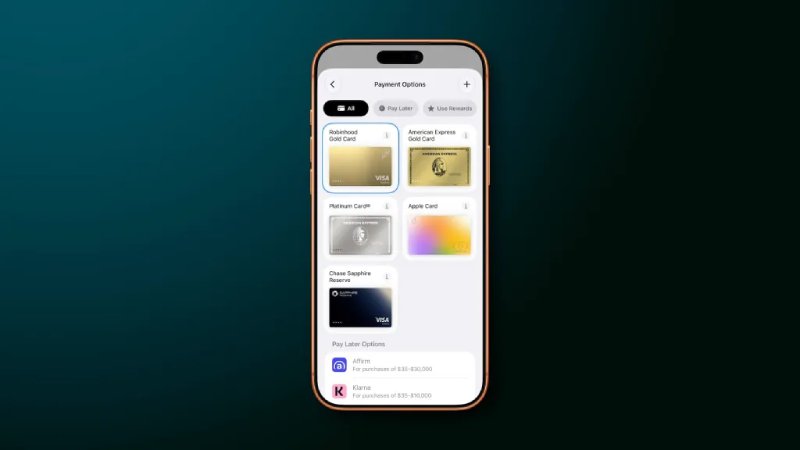
Apple has revamped the Apple Pay checkout experien..