

_(1).jpg)
Tiffany Wu (Yiwen Wu) was born and raised in Guangzhou, China. In her childhood memories, the city's banyan aerial roots, the stifling heat before a typhoon, and the straight lines of rainwater dripping from the eaves of qilou buildings are all still vivid. "The weather in Guangzhou is alive—it hits your face, you can't escape it," she says. That visceral sense of being wrapped by nature has now been encoded into a massive projection wall at the SVA Chelsea Gallery in New York.
Now a 2026 graduate of the MFA Computer Arts program at the School of Visual Arts, Tiffany's work "Nature" is on view alongside the group exhibition "In Passage" through June 17. But her solo project has already drawn special attention from curators, tech journalists, and ordinary visitors—because it allows everyone to change the seasons with their own hands: brushing snowflakes, scattering autumn leaves, and lifting clusters of summer foliage with an open palm.
Her work reflects a broader question facing American cultural institutions: how can emerging technology become more accessible, inclusive, and emotionally restorative for the public?
Technology as a Public Language
“Nature” is a large-scale interactive wall projection. It uses TouchDesigner to build particle systems, MediaPipe for real-time hand tracking, and optical flow algorithms to detect subtle movements. The installation features three seasonal modes—winter, fall, and summer—each with distinct physical response logic:
- Winter: When viewers wave their hands, snowflake particles layered over a snowy landscape are disturbed, rotated, and dispersed, as if creating a miniature blizzard in a vacuum.
- Fall: Drifting leaf particles move along optical flow vectors; hand gestures can change the wind direction and the density of leaf clusters.
- Summer: When viewers slowly and mindfully raise their palms, clusters of dense summer leaves are “sucked” toward the hand and enlarged, mimicking the poetic motion of plants growing toward light.
“I intentionally set a high threshold for the summer gesture,” Tiffany explains. “You have to slow down. You can’t just swipe like a TikTok video. This itself is a behavioral cue: interacting with nature takes patience.” This design unintentionally addresses a major public health issue in contemporary society—fragmented attention spans. In the United States, anxiety disorders and attention deficit conditions continue to rise. “Nature” offers a low-cost, non-pharmaceutical space for “attentional restoration.”
Social Impact Beyond the Gallery
"That was the moment I felt the work was truly complete," Tiffany says. "Digital art should not be an elite playground. It should be like morning tea on a Guangzhou street corner—anyone can walk in and feel a little warmth."
The installation has received warm responses from visitors; attendees at the opening were drawn to its gesture-based interaction. Tiffany hopes to expand the project into community workshops.
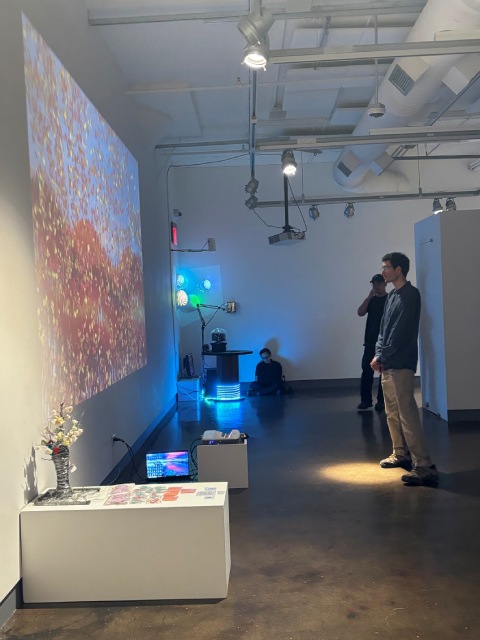
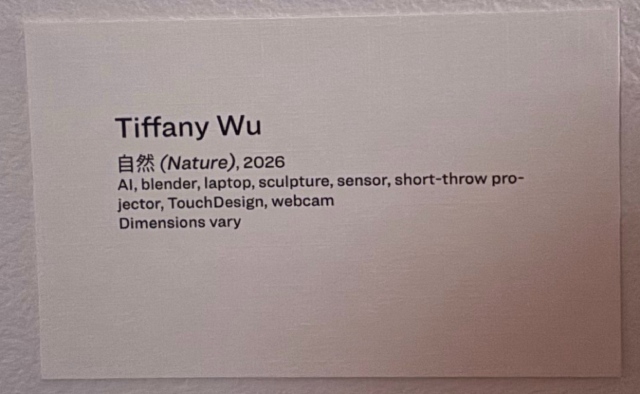
Beyond her technical and artistic achievements, Tiffany’s work also reflects a strong commitment to public engagement and cultural accessibility. Her interactive installation "Nature" was designed not only for traditional gallery audiences, but also for a broader public, including visitors from different backgrounds and those with limited prior exposure to contemporary art or emerging technologies. During its presentation at the SVA Chelsea Gallery, the work attracted diverse audiences and encouraged viewers to physically engage with AI-driven interactive art in an intuitive and emotionally resonant way. By lowering the barrier between advanced technology and public participation, Tiffany’s practice demonstrates a meaningful cultural impact that extends beyond the art world itself.
Future Commitment: Giving Back to Guangzhou, Rooted in America
Tiffany’s next plan, should she receive NIW approval, is to remain in New York while regularly returning to Guangzhou for residencies in urban villages. She hopes to use the same technology to document the shifting light and shadows under banyan trees where residents gather to cool off, thereby enriching the American art world’s understanding of “non-Western” perspectives on nature.
“Climate change, the attention crisis, the digital divide—these problems have no borders,” she says. “I brought from Guangzhou a bodily memory of living with weather. In New York, I learned to turn that into code and projection. If my work can convince one ordinary person who never cared about technology to raise their hand and ‘touch’ a snowflake, then I have already made a small but real contribution to the national interest.” Then the work has already done something meaningful: it has made technology feel human, accessible, and alive.
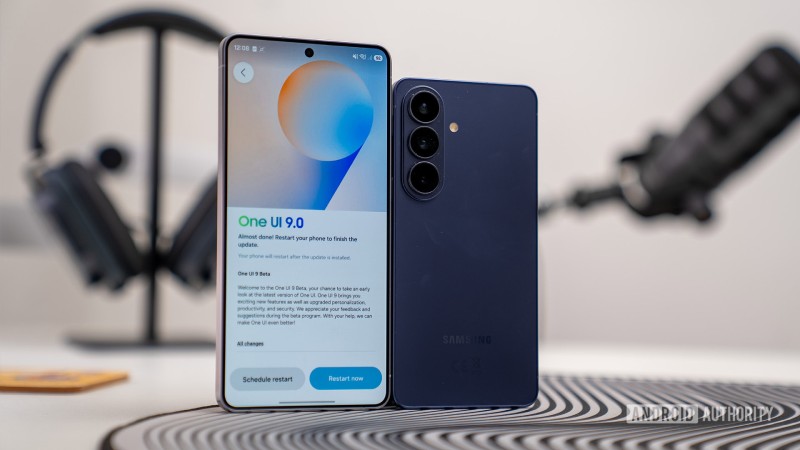
Samsung is now delivering its One UI 9 update to G..
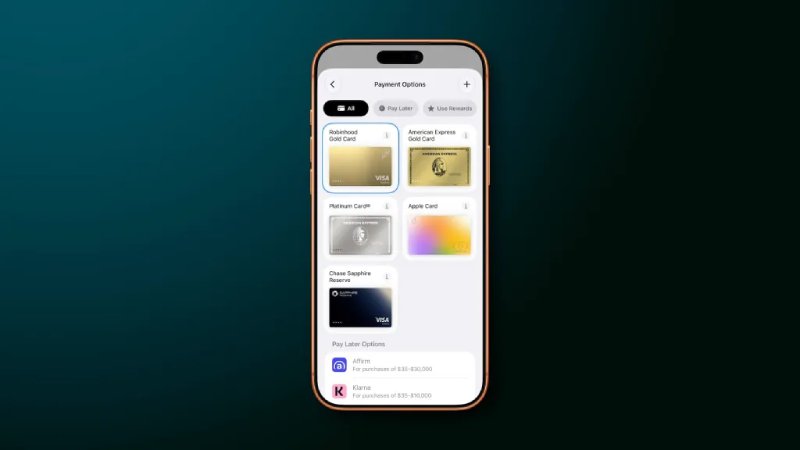
Apple has revamped the Apple Pay checkout experien..